
Kwiakah Young Forest Stewards Curriculum
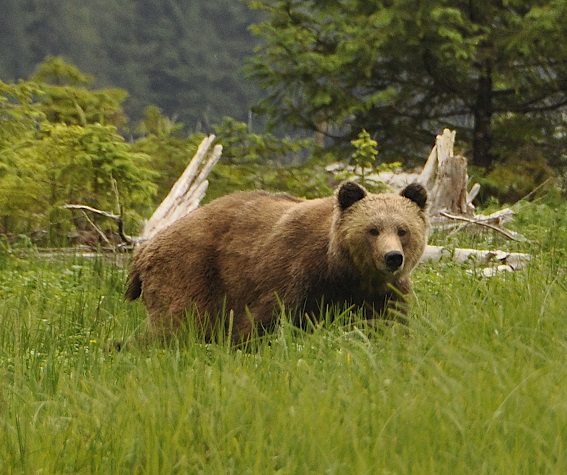
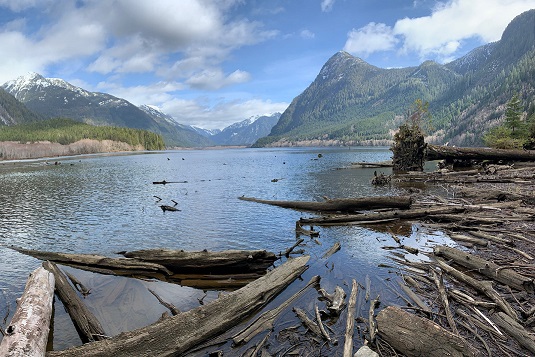
The Kwiakah First Nation is a First Nation in British Columbia, Canada. Our homeland is the Phillips River watershed on the coast of British Columbia. This watershed has great biodiversity and abounds with animals from grizzly bears (nən), cougars (mam̓isa) and mountain goats (məlx̌ƛu) to squirrels (təminas), mice (gigəy̓acaǧa) and raccoons (mayus). While there are still some stands of old growth forest, before logging companies came to our lands, all our forests were old growth, supporting ancient coniferous trees like Douglas fir (x̌ox̌m̓əs), Redcedar (wəlkʷ) and Hemlock (lox̌m̓əs). These trees can live hundreds of years and become giants in the forest. The cedar tree was most important to our Kwiakah ancestors. They relied on it for so many things, from diapers and cooking boxes to canoes and houses. The cedar tree provided for our ancestors and gave them great prosperity.
The Kwiakah First Nation is fighting to protect the Phillips watershed from further industrial logging and other industrial uses. Part of this includes teaching our young children about the forest and forest stewardship. Kwiakah people have long been forest stewards and we see this curriculum as a way to bring the forest to the classroom and children to the forest in a way that will build understanding around how the forest is a whole ecosystem, and that each part of the forest, from the soil to the treetops is important for a healthy forest. These are lessons for early forest stewards!
Our curriculum is divided into three age groups: 0-2 years; 3-5 years; and 6-9 years. Each year is divided into six parts and centres around books and visits to the forest. The intention is to encourage children at a young age to think about their role as stewards and caretakers of the forest, the importance of the forest ecosystem and the importance of biodiversity. We hope that through this program, children, their parents and their teachers will reconnect with the forest, laying the foundation for our future forest stewards who will understand the value of a forest as an ecosystem that supports all life.
